Friday, 15 June 2018

Cranford Park news

Although I've had no camera for several weeks I have still been visiting Cranford CP to do the UKBMS butterfly transect
 
Thanks to the lovely 'Bank of Mum' I now have a brand new camera and was itching to try it out at my favourite place today
 
Todays butterfly transect took 2 hours and I counted 73 butterflies of 9 species - the highlight being the tiny Brown Argus that refused to have its photo taken
 
Others seen today were:-
 
Speckled Wood
 
 
Speckled Wood (underwing)

 
Small Heath - this one looking a bit old and tatty
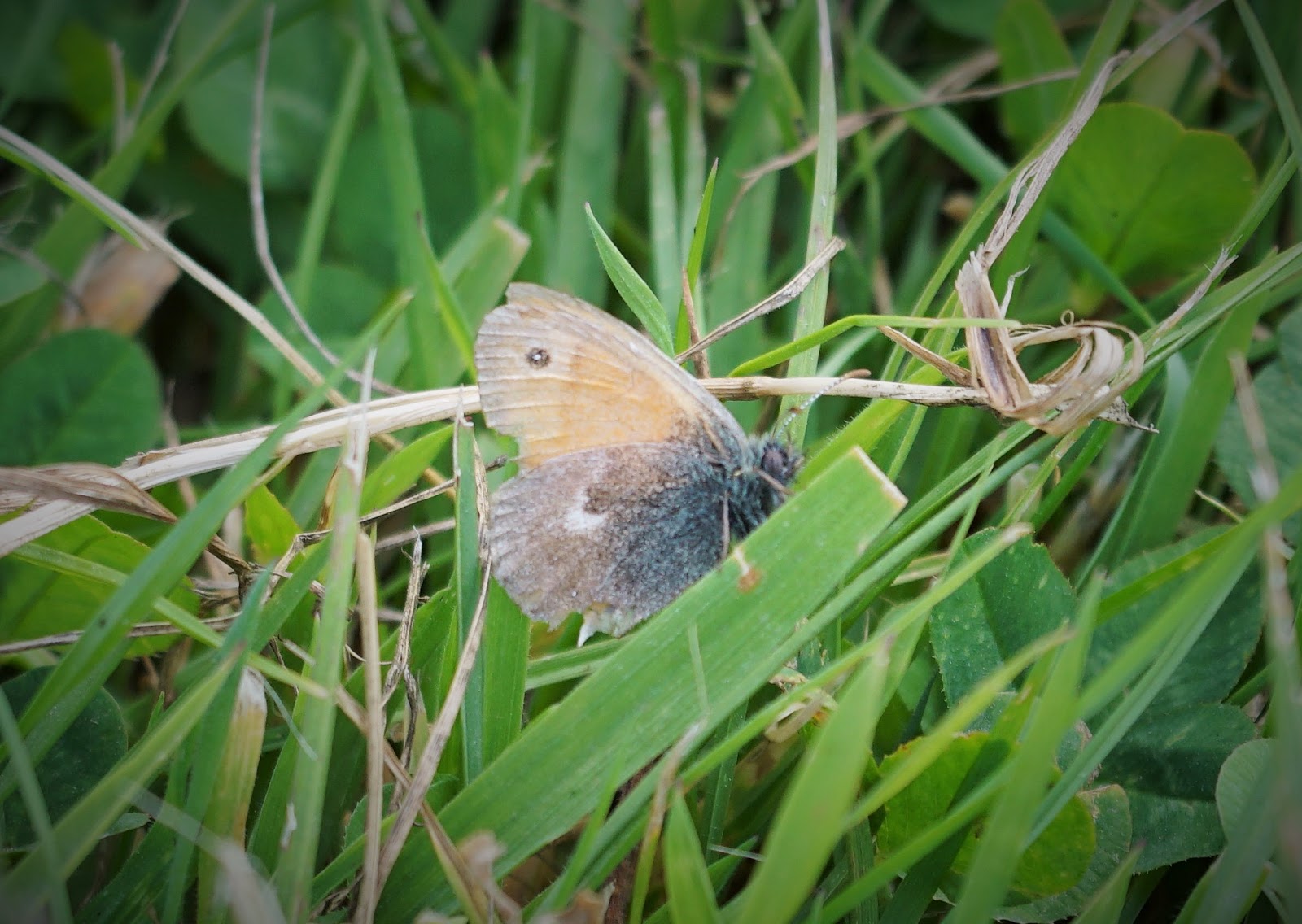
 
and the beautiful Large Skipper

 
Large Skipper face view

 
Its that time of year again when the Ragwort is just coming into flower - Ragwort is the food plant of the larvae of the Cinnabar moth


This is one of several day flying moths - the caterpillars are nothing like the adult - they are orange and black striped

 
It seems early but some of the bramble flowers are already showing igns of turning into blackberries
 
 
There were lots of hoverflies around - my other passion after butterflies - I am waiting on confirmation on the three below but have named them to the best of my ability
Edit - all three confirmed by Ian Andrews
 
Eupeodes luniger

 
Xanthogramma pedissequum

 
Syrphus species

 
Along with the butterflies and hovers there were plenty of Harlequin ladybirds out and about - below is the larva and adult


As to be expected at this time of year there were not many birds showing well - the juveniles are staying hidden and close to the parents - and the parents are staying hidden as most of them will be either sitting on second broods or going through moult - but I did find a juvenile Long-tailed Tit
 
 
and managed a badly focused photo of a young Blackcap

 
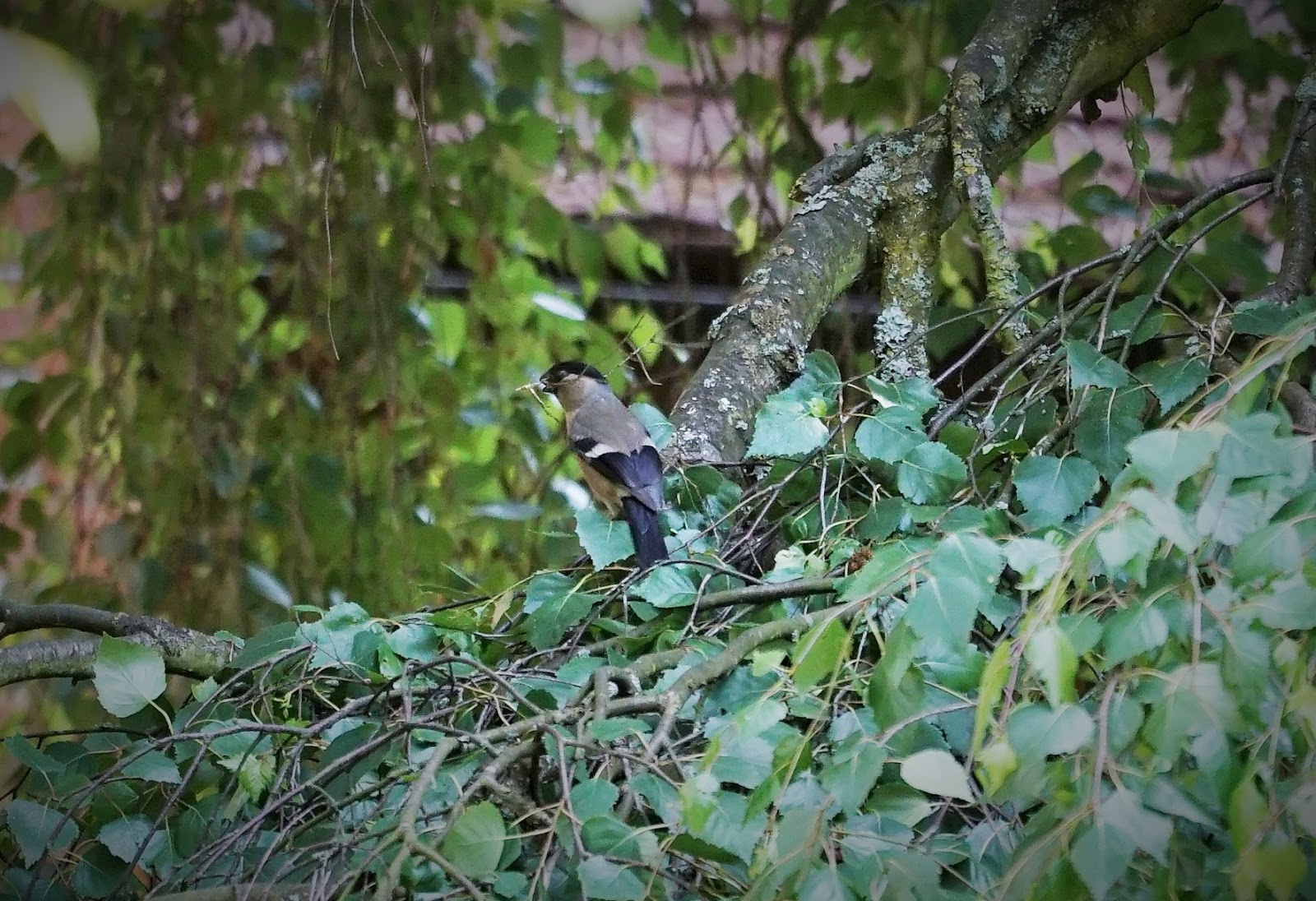
but the highlight for me was seeing Bullfinches - I found a pair in St Dunstans churchyard a few weeks ago but having no camera meant I couldnt take any photos - when I last saw them last week both the male and female were taking food into an evergreen shrub and then reappearing with faecal sacs (a white sack that contains nestlings pooh) - so I was confident they had chicks in the nest - however today the female flew in with nesting material and both birds were calling - so either the last brood have fledged and the parents are preparing for a second brood or the previous brood perished and the adults are trying again - either way it was nice to see the female today even though trying to photograph her from a distance with the wrong lens made it a bit trying


The wildlife pond is looking very lush at the moment


and has attracted a few little critters - this is a male Banded Demoiselle
 
 
and there were two male Broad-bodied Chasers


There was also a Black and Yellow Longhorn Beetle playing hide and seek amongst the Ox Eye daisies


On my out of the park I found another Yellow and Black Longhorn on the kissing gate by Roseville Road

 
A very enjoyable visit as always - and very very nice to have a camera back in my hands


Monday, 11 June 2018

The blog is back

I'm back!  I've had no camera since my last blog post and although I went down the road of getting them (I had three dslr bodies) repaired rather than buy a new one it appears it was not to be 
 
Unlike some bloggers I have to have photos on my blog and taking the photos is part of what I do so I have been at a complete loss
 
Recently I was invited to attend an 'off piste' insect experience at Maple Lodge NR just like last year but I felt I had to decline as I had no camera
 
Emily and Sharon (two of the insect experts at Maple Lodge) between them lent me a camera body and macro lens - which I am eternally grateful for - so my day out for yesterday 10th June went ahead
 
I also need to apologise for my punctuation in this post though as it appears my 'full stop' and 'comma' buttons are stuck !! The keyboard needs a proper clean up
 
But back to yesterday - as I left Hayes to make the journey to Maple Cross it was overcast and a little cool - I did wonder if I would be too cold in my t-shirt and waterproof trousers and welly boots - but as I walked on to the reserve the clouds cleared and the sun appeared
 
We started out in front of the Rotunda hide
The marsh orchids are still in full bloom


The high-light of the day for me was finding so many Water Ladybirds - this is a first for me although they've been noted on site for some years - so please exscuse the overload of photos


Not a bad view when you're down in the reeds

 
Also in abundance were the hundreds of Mint Beetles


Plus thousands of damselflies


I found a Garden Chafer which played dead until I went to pick it up - when it decided to drop to the ground and disappear

 
There was a Cinnabar moth flitting around the orchids

 
and Martin played hide and seek with some skimmers and dragonflies

 
As to be expected at this time of year there were plenty of exuvia to be found - these are the empty shells left behind when a dragonfly or skimmer or chaser emerges


Another species of ladybird found was this nice fresh 22-spot


Emily found a newly emerged Darter - this beauty hadnt even dried it's wings out yet

 
and I flushed a female Black-tailed Skimmer

 
Other critters seen today was this Small Magpie moth which displayed it's typical behaviour of flying to the underneath of a leaf

 
and the commonly seen Dock Bug

 
Also as to be expected were the few harlequin ladybird larvae

 
along with plenty of adult 7-spot ladybird

 
There was another species of shieldbug around - the delightfully named Hairy Shieldbug

 
Another first ever for me were the many Ruby-tailed Wasps by the long screen - but it was near on impossible to get an infocus photo

 
This beetle is the Golden-bloomed Grey Longhorn (thanks to Martin for the id)

 
I've never used a lure but Sharon had a couple so we placed them in a couple of strategic places - one of them attracted a beauty within twenty minutes - a stunning Red-belted Clearwing


They are only seen betwenn mid June to early August - The adults are occasionally seen flying around apple trees in the afternoon and the he caterpillars can be found feeding underneath the bark of the foodplant from August to the following May, overwintering as larvae
 
The day was over too quickly but I had a wonderful time - it was so nice to have a camera in my hands again and I cannot thank Emily and Sharon enough - big thanks also to Martin for taking the time to escort us all